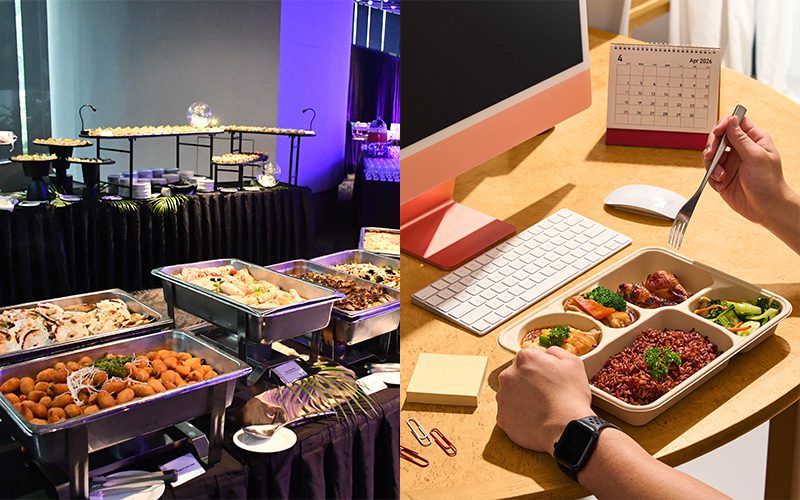
Choosing between buffet catering vs bento catering affects more than how the food is presented. The format can influence guest movement, meal timing, venue requirements, menu choice, and the amount of coordination needed before and after the event.
A buffet may suit occasions where guests have time to move around and choose their own portions, while bentos can keep meal distribution organised when schedules are tight. Elsie’s Kitchen offers halal-certified buffet and bento options for corporate events, training sessions, celebrations, and larger group gatherings.
Before comparing buffet catering vs bento catering, consider how guests will receive and enjoy the food. Their seating arrangements, break duration, ability to move around the venue, and expectations can indicate which format will feel more comfortable.
A buffet allows guests to select dishes and portion their meals according to their preferences. This can suit celebrations, networking sessions, and longer corporate functions where people have time to move through the serving line, speak with one another, and return for more food if they wish.
Elsie’s Kitchen’s buffet range gives organisers room to plan for guests with different tastes, age groups, and meal expectations. A varied spread can make it easier to accommodate different flavour preferences, spice tolerance, and individual appetites without expecting every guest to choose the same combination of dishes.
Bento meals are individually packed, making them practical when guests need to receive food quickly or remain at assigned seats. They can work well for seminars, training sessions, working lunches, and programmes that cannot accommodate a lengthy buffet queue.
Each guest receives a complete, pre-portioned meal, which can simplify meal distribution and reduce movement around the venue.
When considering buffet catering vs bento catering, the venue may make one format easier to manage than the other.
Organisers should also plan delivery around the intended meal time, particularly for longer programmes. Keeping catered food within appropriate temperature and consumption periods is an important part of planning catered meals safely.
A full buffet needs sufficient serving space for tables, food warmers, utensils, plates, and guest circulation. The setup should also avoid blocking entrances, walkways, presentation areas, or important access routes.
Elsie’s Kitchen’s buffet catering may include delivery, buffet-table setup, food warmers, disposable wares, and scheduled collection depending on the package. The venue still needs enough space and time to support installation and removal.
Bentos generally require less serving equipment because meals arrive ready for individual distribution. They can be placed at seats, arranged at several collection points, or handed out by event staff.
This flexibility can help when a venue is compact, or the meal break is short. Organisers still need to coordinate delivery and distribution, but there is usually less equipment to install and collect.
It is also useful to look beyond the starting price per person. Elsie’s Kitchen currently lists bento meals from $5 per person and buffet catering from $13.90 per person, but the final event cost can also depend on minimum orders, delivery, setup, equipment, collection, and applicable surcharges. Comparing the full order requirements gives a more useful picture than choosing by headline price alone.
The difference between buffet catering vs bento catering is especially noticeable when considering menu choice and portioning. Hosts should think about how much choice guests need and whether specially arranged meals must reach particular people.
A buffet normally gives guests several dishes to choose from across staples, proteins, vegetables, sides, and other accompaniments. Guests can select what appeals to them and adjust how much they take.
More dishes, however, do not automatically create a better meal. An oversized spread can take up more table space and may leave some dishes underused, while a more balanced selection can give guests enough variety without unnecessary overlap.
Bentos give each guest a set combination of dishes. This gives organisers clearer control over how many complete meals are available and makes serving quantities more predictable.
The format can also help when vegetarian, no-beef, no-seafood, or allergy-related meals need to be identified and handed to specific guests. Dietary requirements should still be communicated before the final order is confirmed.
The final decision between buffet catering vs bento catering should reflect the purpose, pace, and level of formality of the occasion.
Buffets often work well for weddings, family celebrations, company gatherings, and longer functions where dining forms part of the guest experience. Guests have time to choose their food, interact, and enjoy a broader spread.
For networking sessions or celebrations where people are already moving around, the buffet can fit naturally into the guest flow.
Bentos are often more practical for meetings, training sessions, seminars, site meals, and tightly scheduled programmes. They allow organisers to serve many guests without directing everyone towards a single buffet line.
Some events may work better with both formats rather than choosing one for the entire day. Bentos can suit fixed-seat sessions or working lunches with shorter, scheduled meal breaks, while a buffet may fit a later networking or celebration segment where guests have more freedom to move around. Organisers using both should coordinate delivery times, labelled meal counts, service windows, and setup requirements separately for each part of the programme.
Choosing between buffet and bento catering begins with understanding how guests will use the space, how much time they have to eat, and what level of choice they expect. Buffets support social dining and broader selection, while bentos offer structured distribution and consistent portions.
Elsie’s Kitchen offers both formats, so organisers can choose according to guest count, programme timing, venue layout, and dietary needs.
Share your guest count, venue layout, programme timing, budget, and dietary requirements with Elsie’s Kitchen to find a catering format that fits your event.