When organising an event, one of the hardest decisions is working out how much food to order. Too little can leave guests disappointed, while ordering far beyond the expected attendance can create unnecessary leftovers.
Understanding how portion planning affects catering waste gives organisers a more practical way to make that decision. Instead of treating extra food as the default safety measure, quantities can be based on the confirmed guest count, event format, serving time, and how guests are likely to eat.
The aim is not to make the spread feel restricted. It is to provide enough food for everyone to enjoy a complete meal without relying on excessive quantities simply for reassurance.
At Elsie’s Kitchen, we provide halal-certified catering across formats including buffets, bentos, canapés, and other event menus. Our buffet portioning guidance gives organisers a more grounded starting point for estimating quantities, so ordering decisions can be based on practical serving assumptions rather than arbitrary extras.
Expected attendance is one of the strongest factors affecting food quantity. Ordering for the full invitation list rather than the number of people realistically expected to attend can create a sizeable gap between food supplied and meals actually required.
Where possible, set a clear response deadline and update the caterer as attendance becomes more certain.
For a corporate event, registration records, staff confirmations, departmental lists, or shift schedules can provide a more reliable figure than the original invitation count alone.
Some contingency can still be useful, but it should reflect realistic last-minute changes rather than an unlikely worst-case scenario.
For example, 100 confirmed guests does not necessarily mean ordering food for 120 simply because a few additional attendees are possible. The more reliable the attendance estimate becomes, the easier it is to set suitable menu quantities without creating unnecessary surplus.
The same headcount does not always result in the same level of consumption.
A full lunch for adults who have spent the morning in meetings or activities may require different provision from refreshments served to guests arriving after another meal. Children, older attendees, or people staying for only part of the programme may also eat differently.
The event format matters too. Lunch during a full-day seminar creates different expectations from food served during a short networking break.
Giving the caterer this context lets the quantity recommendation reflect how the event will actually run, rather than relying on headcount alone.
Buffets, bentos, and canapés distribute food differently, so quantity planning should reflect how each format is served.
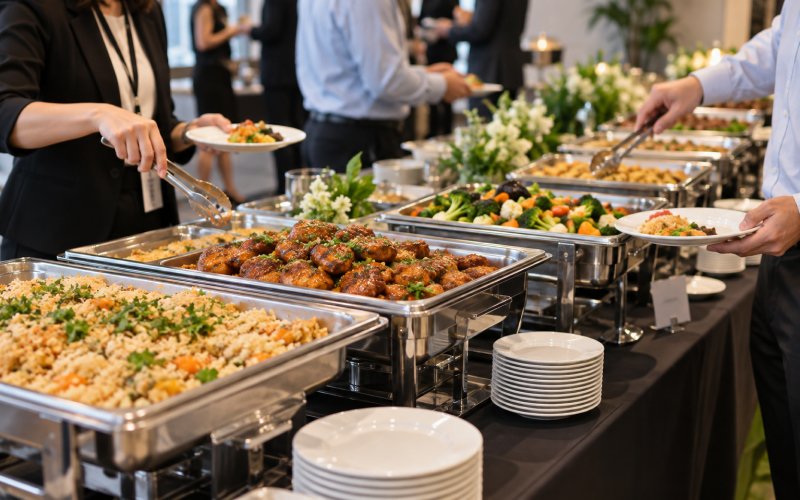
With a buffet, guests choose which dishes to take and how much of each item they want. Quantities therefore need to work across the whole spread rather than treating every guest as having one identical fixed meal.
For our buffet menus, food portioning is based on approximately 500g per person, with an additional 5% food buffer. Countable items and tray quantities should still be checked by dish because item size, tray capacity, and menu format can differ.
These figures provide a practical starting point when arranging buffet catering in Singapore, but the final amount should still reflect the meal period, guest profile, programme length, and menu composition.
For organisers considering how portion planning affects catering waste, buffet service provides a clear example. Increasing every dish independently “just in case” can create much more excess than intended and increase the likelihood of buffet leftovers.
Bentos provide one individually packed meal per person, making it easier to calculate the number of complete meals.
For events that require bento catering in Singapore, this format can be particularly practical when attendance is relatively controlled, such as at a registered seminar, training programme, or staff lunch.
If 80 attendees are confirmed, there is a clear starting point of 80 complete meals before deciding whether a small contingency is genuinely necessary.
Waste can still occur when you add large numbers of spare boxes without a clear reason. When attendance is reliable, a smaller allowance may provide enough flexibility without creating avoidable leftovers.
Canapés are typically calculated by piece, so clarify their role in the event before setting quantities.
For canapés catering in Singapore, we recommend around six to eight pieces per person when canapés are served as light refreshments. You’ll need more if they’re expected to replace a full lunch or dinner.
That distinction helps avoid two opposite problems. A light-refreshment quantity could leave guests short when canapés are replacing dinner, while a full-meal quantity for a brief reception could result in considerably more food than people are likely to eat.
A buffer can protect against uncertain attendance and differences in appetite. Rather than adding extra portions across every dish, the buffer should reflect the number of guests who may realistically attend and how they are likely to eat.
A 5% buffet buffer provides a useful reference point when planning beyond confirmed attendance.
Some situations may warrant additional reassurance. A meal after a long programme, guests unlikely to have eaten beforehand, or limited alternative food options nearby may justify a slightly more cautious approach.
The opposite can also apply. A short tea reception, an event held between normal mealtimes, or a gathering where people arrive and leave at different times may call for lighter provision.
A caterer may also recommend increasing one or two dishes that are likely to be especially popular, such as a staple, protein main, or familiar crowd-friendly item, instead of enlarging the entire menu. This can help cover likely demand without multiplying excess across every course.
Headcount is only one part of food quantity planning. Meal timing, available eating time, and menu substance can all influence consumption.
A full lunch or dinner should provide enough substance across staples, proteins, vegetables, and supporting dishes. A shorter daytime break may need a lighter selection.
Matching the menu to the time of day helps avoid providing a full meal when guests only have enough time or appetite for refreshments.
Meal timing also shows how portion planning affects catering waste in practice. A smaller, well-balanced meal can be more suitable than a large spread with several dishes guests are unlikely to need.
More courses do not automatically mean the event is better prepared.
Before adding another side, dessert, or snack, review whether the existing menu already meets the group’s main needs. A buffet with a filling staple, sufficient protein choices, vegetables, a vegetarian-friendly option, and some easy-to-eat items may already offer enough variety.
If the main concern is that guests could still be hungry, strengthening a popular staple or substantial main dish may be more useful than adding another side that guests are likely to take only in small amounts.
Taking steps to prevent and reduce food waste at source also means avoiding unnecessary over-ordering before surplus food is created in the first place. This gives organisers a more practical way to strengthen the menu where it matters instead of treating extra dishes as an automatic safeguard against shortages.
Reducing waste should never depend on keeping catered food for longer than recommended.
We advise consuming catered food within two hours of arrival. Food is best consumed within four hours of being cooked at its central kitchen, with at least two hours needed for packing, delivery, and setup.
The event programme should therefore allow guests to eat reasonably soon after the food arrives. If lunch starts at 12.30 pm, for example, arranging delivery much earlier simply to create additional setup time could shorten the practical consumption window.
Also avoid ordering excess food on the assumption it can simply be kept for much later in the programme. Better planning should reduce unnecessary leftovers without compromising food safety.
Understanding how portion planning affects catering waste helps make catering decisions more deliberate without treating large amounts of extra food as the default.
Confirmed attendance, guest profile, catering format, event timing, menu composition, and contingency allowance can all help determine how much food is genuinely needed. The goal is not to predict every appetite perfectly, but to make quantities more closely reflect how the event will actually run.
At Elsie’s Kitchen, we provide halal-certified buffets, bentos, canapés, and other catering formats for corporate and social events in Singapore, giving organisers options that match how guests are expected to eat. Share your event format, guest count, meal timing, and menu preferences with us to plan practical food quantities without unnecessary overordering.